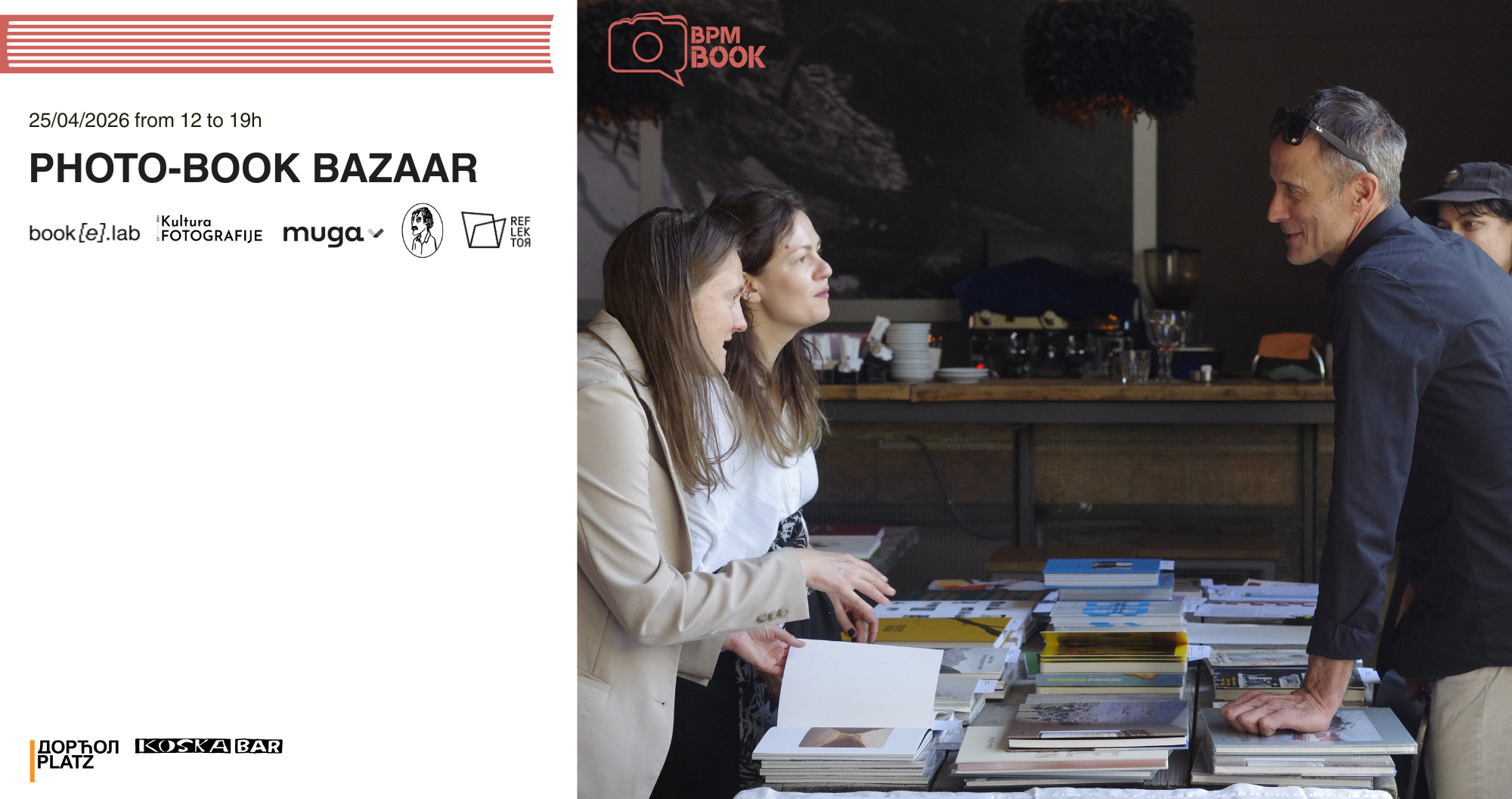
We are happy to welcome you to a new edition of the Belgrade Photo Book Week, a gathering dedicated to the richness and diversity of photography through the format of the photo book. Building on the momentum of previous editions, we invite you to come together once again and experience the evolving landscape of visual storytelling.
Date: April 25th 2024
Time: 12:00 PM – 7:00 PM
Location: Koska Bar, Dorćol Platz
At the heart of this year’s programme, the Photo Book Bazaar presents a curated selection of publications by both established publishers and independent photographers. Among the featured participants are Book [e] lab, Kultura Fotografije, Muga, Pierre von Kleist, Reflektor, Vladeta Photo Zine, alongside a range of compelling works by independent authors.
Spend the day browsing, discovering, and connecting through books that challenge, inspire, and expand the way we see. Whether you are a dedicated collector, a photography professional, or simply curious, the Bazaar offers an open space to engage with the medium in a direct and tangible way.
Join us for a day shaped by images, encounters, and shared curiosity, and celebrate the photo book as a space where narratives take form.
We look forward to seeing you there.
Special thanks to the Embassy of Austria in Belgrade, Austrijski kulturni forum Beograd, Embassy of Portugal in Belgrade, Instituto Camões, Instituto Cervantes de Belgrado, and Istituto Italiano di Cultura Belgrado for their generous support.
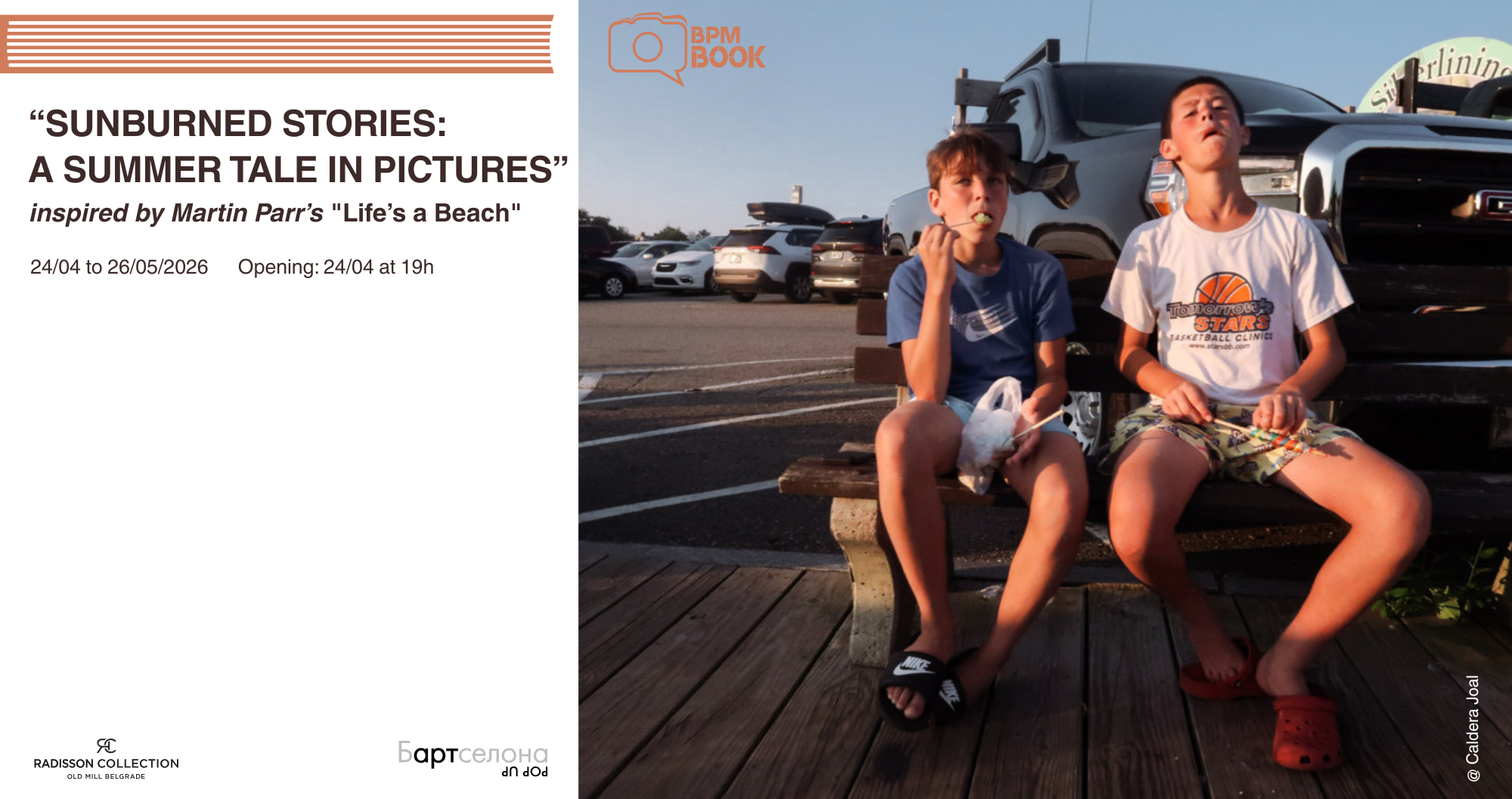
Summer is not as innocent as it looks.
Beneath the bright colours, the sticky skin and the endless light, something else unfolds.
A choreography of bodies exposed to the sun.
Rituals repeated year after year.
Moments of pleasure, excess, boredom and quiet absurdity.
In SUNBURNED STORIES, summer becomes a space of observation. A place where intimacy turns public, where gestures are exaggerated, and where the ordinary reveals its strange, almost surreal nature. Sunburned skin, plastic textures, restless children, distracted gazes, fleeting encounters, fragments of a season that feels both universal and deeply personal.
This exhibition marks the fourth collaboration between Бартcелона POP UP and Radisson Hotel, a series dedicated to paying tribute to the photobook as a central form of photographic expression. Each edition takes inspiration from a seminal publication, revisiting its themes and visual language through the eyes of contemporary photographers. On this occasion, the exhibition draws from Life’s a Beach, the iconic photobook that redefined how we look at leisure, tourism and the rituals of summer.
Conceived as a tribute to a way of looking that embraces humour, contradiction and honesty, this exhibition brings together a group of photographers who engage with the language of everyday life. Their images do not seek perfection, but presence. Not spectacle, but recognition.
There is warmth here, but also tension.
There is laughter, but also discomfort.
There is beauty, but never without friction.
Because summer, after all, is not just a place we go to,
it is something we perform.
Artists
Ana Batricevic (Serbia) @ana_batricevic
Daniel Quirarte (Mexico)
Joal Caldera (USA) @dudewiththe_camera
Jovana Kuzmanovic (Serbia) @jqzmanovic
Jean Guy Lathuilière (France)
Marie Lourier (Russia) @marie_lourier
Meri Mustapic (Croatia) @sea_mousse_
Tim Rusell (British) @timrussellphotography
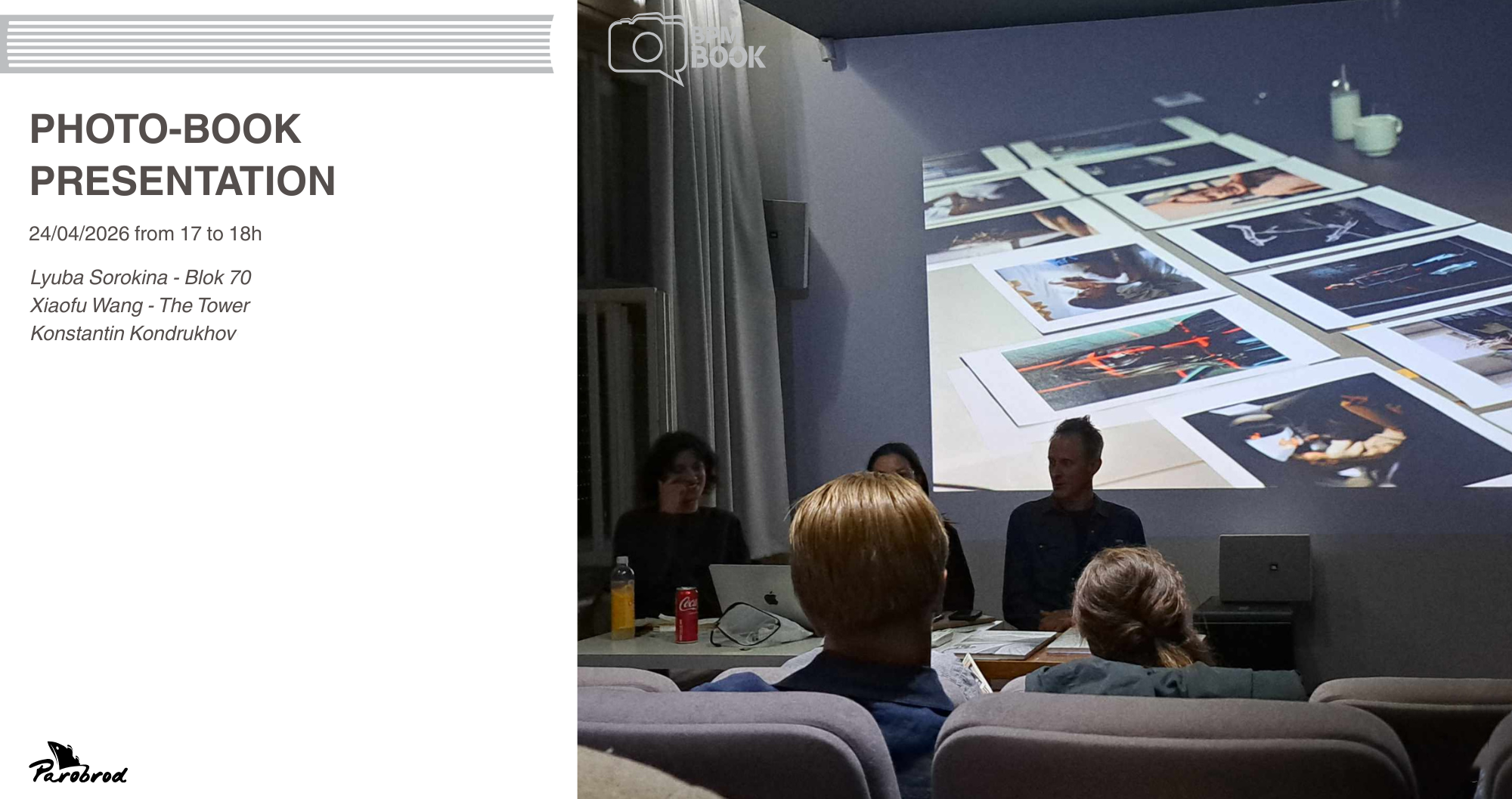
The presentation will be conducted in English
As part of BPM Book Week 2026, we are pleased to invite you to an special event dedicated to photobooks and the stories they hold. This session brings together three photographers whose recent works are deeply connected to Belgrade, each offering a personal and distinct perspective on the city.
Join us for a series of presentations where image, memory, and place intertwine, opening up different ways of seeing and understanding Belgrade today.
We would like to invite you to como to one more sesion where 3 differents photographers they will present their last work…. highly connected to our city, Belgrade.
Konstantin Kondrukhov
Looking for safety and new opportunities in 2022, I found myself in Belgrade — a city I didn’t know much about before. My choice wasn’t random: friends of mine, concert organizers who had come a few months earlier, announced a music festival in Belgrade called Changeover. That festival became a bridge to a new reality and the beginning of my journey. Through photographs, I will share the story of the people, experiences and sounds that surrounded me during this challenging but amazing time. This will be a photobook about change and the invisible connection that brings us together through music in a new place.
Ljuba Sorokina
Lyuba So (Sorokina, born 1986 in Leningrad, USSR) is a photographer based in Slovenia. Startred out as a street artist in 2006, the camera replaced a spray can over time, becoming her main medium and a way to engage with space, experience and personal perception.
For Sorokina, photography functions as a method of immersion rather than documentation. She is interested in environments that resist order and clarity and in how perception can be altered through framing, accumulation and sustained attention. Through her practice, she explores photography as a means of navigating unfamiliar contexts, allowing imagined layers to emerge from direct experience.
Blok 70 is a photographic project focused on the Chinese market in New Belgrade, approached as an already alien and visually saturated environment. The artist works with the market as a collection of spatial fragments – shelves, signs, packaging, colours, improvised structures – paying attention to how the space is assembled and how it is experienced rather than how it is explained.
Xiaofu Wang
Xiaofu Wang is a Chinese-Australian photographer based in Berlin. She completed a Bachelor’s in Media Arts and Production at UTS Sydney and graduated from the Ostkreuz School of Photography in 2023. Her work explores themes of history, place, and the intersections between collective and individual experiences.
The Tower is part ode, part record, and part speculation about one of Belgrade’s most important buildings— Genex Tower, a symbol of the city and one of the most recognizable brutalist structures in the world. Situated at the edges of documentary photography, the photographs in the book were taken over nine separate trips to Belgrade with an analogue, medium-format camera between 2021 and 2024.
The photographer searches for clues among the building’s memorabilia and debris—drawing Derrida’s concept of hauntology, Mark Fisher’s lost futures, and speculative history—trying to understand its legacy within the contemporary landscape and piece together a story that will always remain fragmentary. An accompanying essay by art historian Sonja Jankov situates the building in a concrete historical and architectural context, examining Yugoslav modernism and the rise and fall of Generaleksport. Finally, Maša Seničić’s texts offer a poetic and personal perspective, teasing out what complex feelings the building evokes in her as a native of Belgrade.
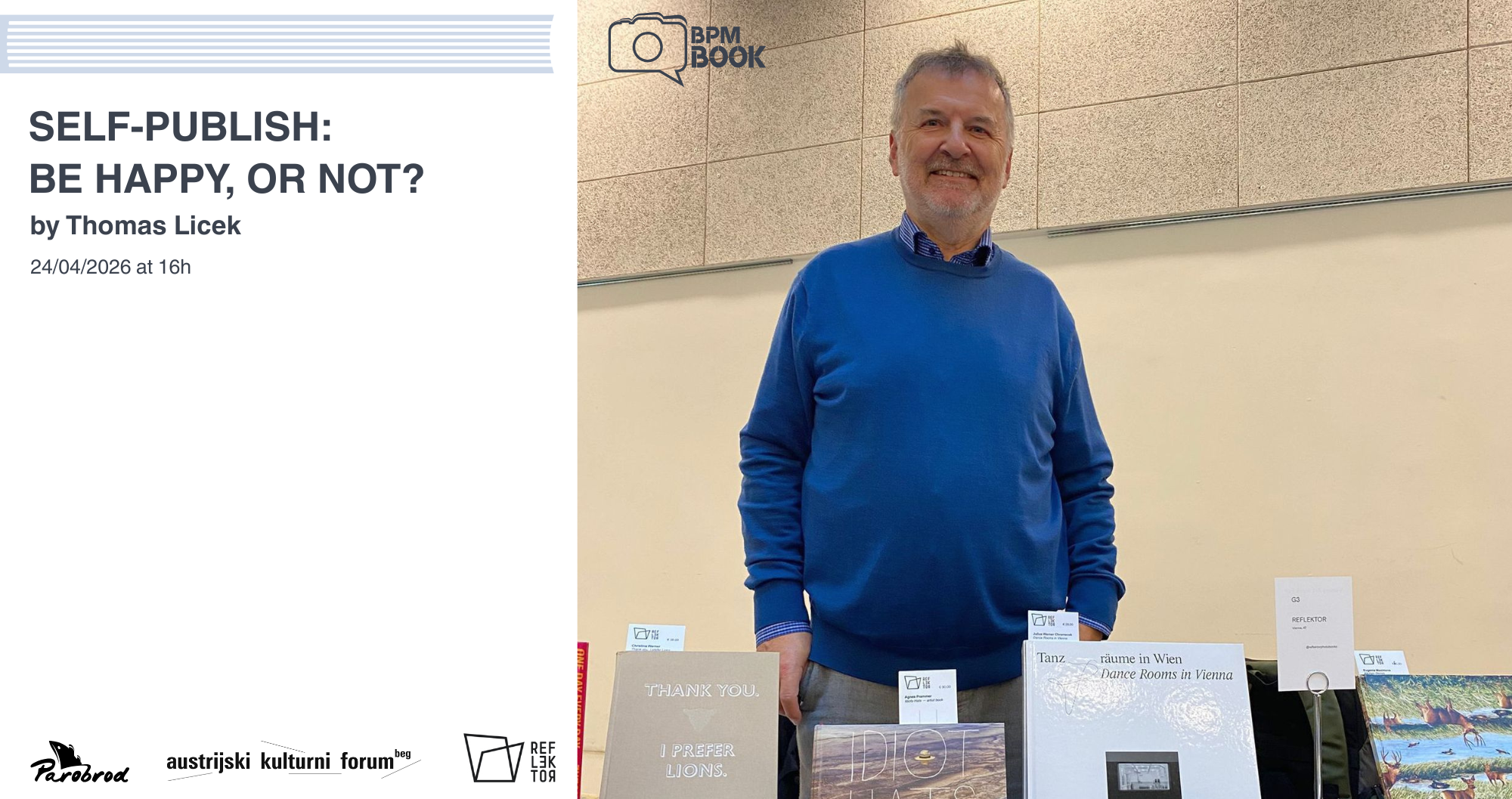
When you self-publish a photobook, the question soon arises: how does the book actually reach readers?
Self-publishing offers plenty of opportunities and freedom – but you also have to take an active role in handling distribution and raising your profile.
Let’s discuss different approaches and new ways of making your publications accessible to a wider audience.
By Thomas Licek
Reflektor
The talk will be conducted in English
Event done thanks to the Austrijiski Kulturni Forum.
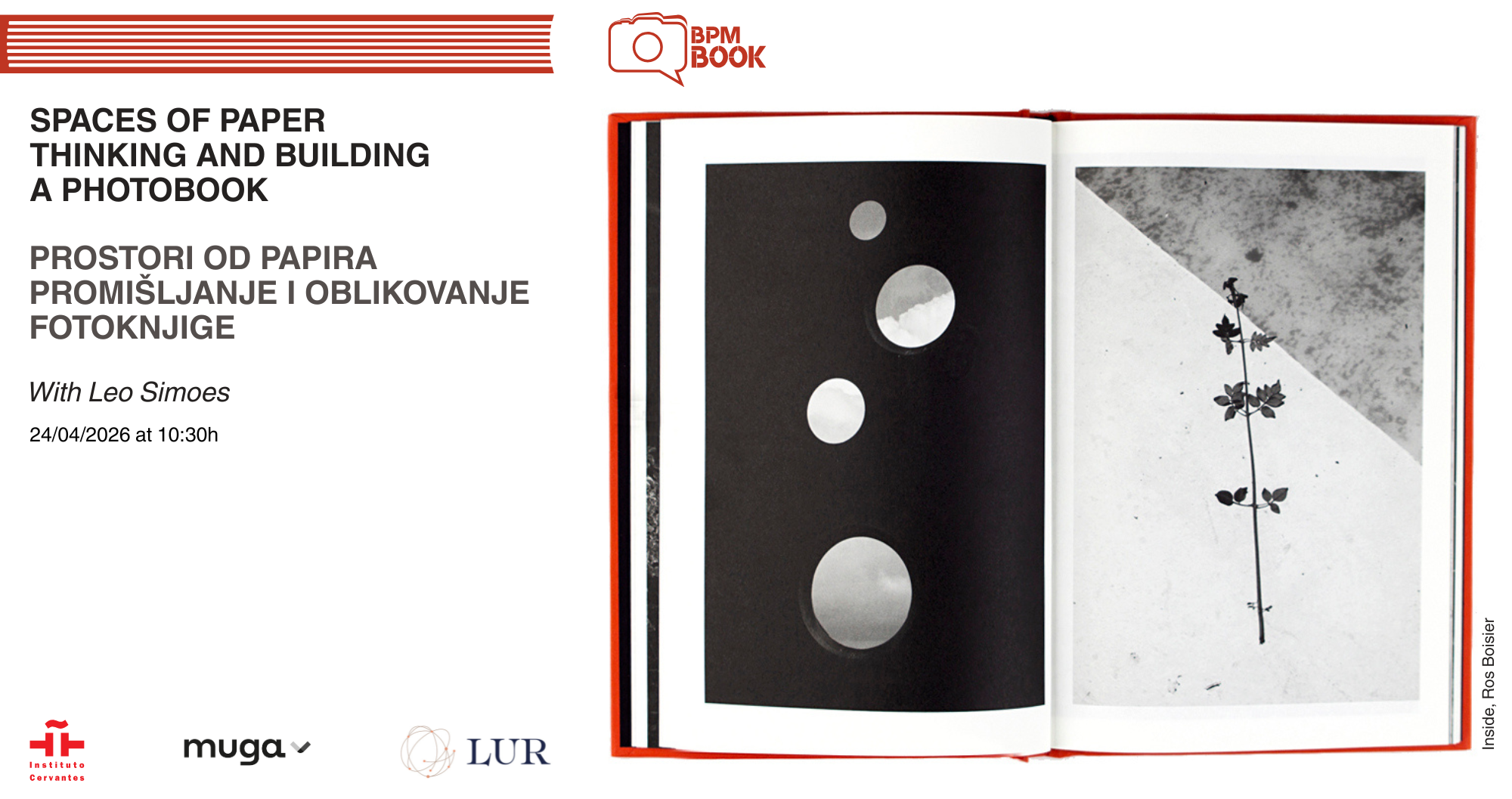
Thinking and Building a Photobook
With Leo Simoes
An introduction to the photobook as a cultural, artistic, poetic and political medium: a space of paper where a visual discourse is articulated, expressed and communicated through images, texts, design, materiality and graphic production.
Leo Simoes is the director of Muga, an independent publishing house specialising in photography, and of LUR, an online platform that gives visibility to contemporary photographic creation and produces and disseminates critical thinking about images.
The talk will be in Spanish with simultaneous translation into Serbian.
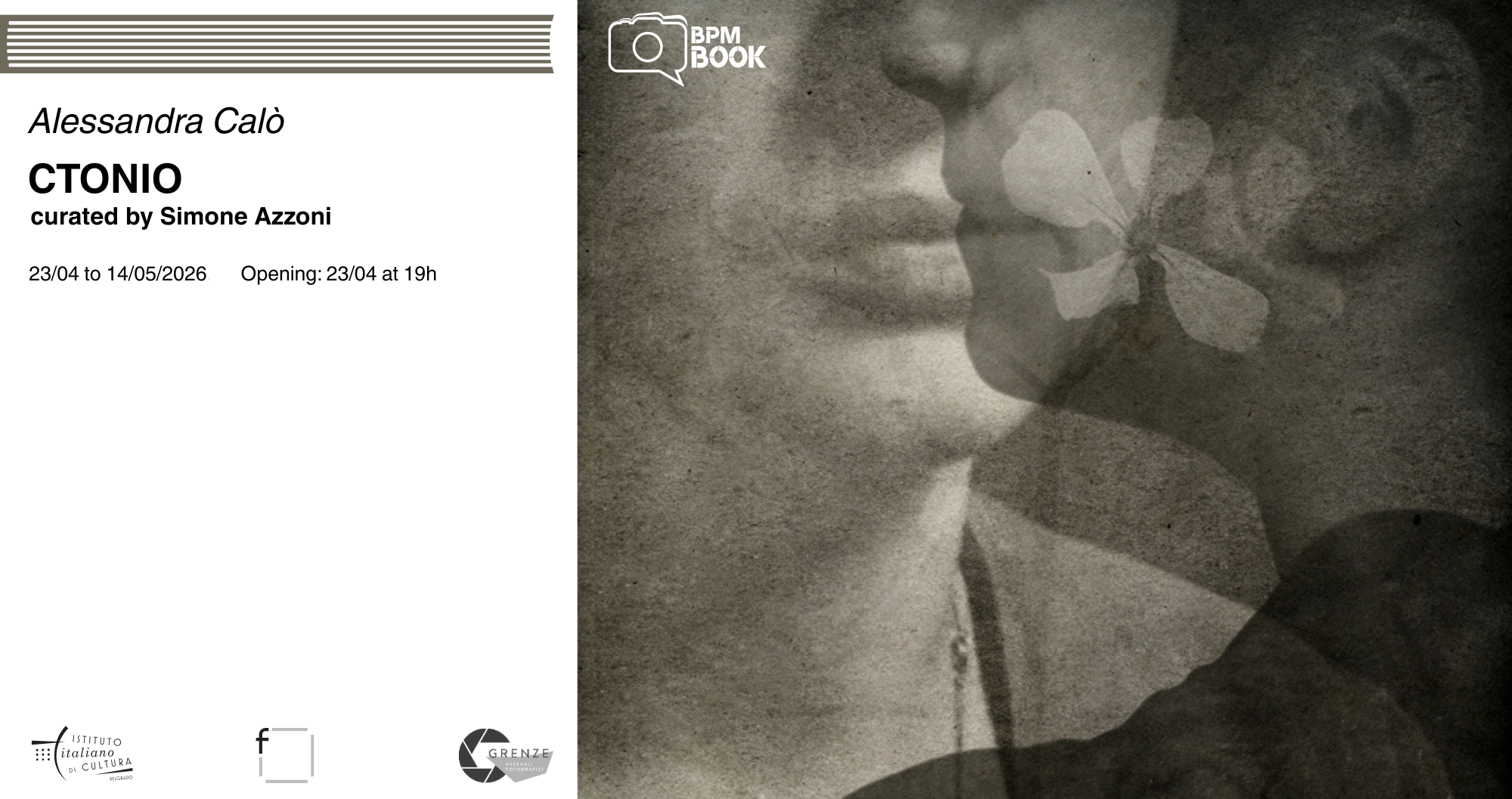
Exhibition realised in collaboration with the Festival Grenze Arsenali Festival, with the essential support of the Istituto Italiano di Cultura di Belgrado, and book published by Studio Faganel.
The story is the result of hours of walking, observing, and listening to all the living elements that make up the island: the land, the stone, the people. In this precise order, I sought to build a series of events that have characterized and made this place unique. I started from the land that men dug to bring the stone to light. I arrived at the land that is now preserved in the cavities that give rise to the underground gardens. In this place, the real past and present blend with facts, legends, possible truths, and distant mythologies: the literary contribution of Marilena Renda is essential in conveying these words, as she was invited to participate in the project by drafting unpublished texts. Photography and words translate and strengthen the meaning of the cavity, understood as a generative space.
Alessandra Calò
Word and image have always been in a mutually generative dialogue. The image evokes absence, while the word brings it to life and sustains it. The twentieth century turned this into a drama – a creative conflict over what forms, settles, and becomes the artisan or material of an imaginary. The installation at the Italian Cultural Institute in Belgrade prompts the relationship between iconographic text and narrative text in the realm of myth, where “high” and “low” vie for the kingdom of storytelling and memory. A tale without an incipit, development, or conclusion unfolds linearly along the walls of the room, without interruption. The visitor is on an empty island. This allows every “once upon a time” to begin anew from the perspective of the frontal viewer, reflecting in the circularity of their own archetype, whether celestial or maritime, earthly or divine. Here, texts emerge from the image like the voice of a sibyl from the cavity plunged into the unspeakable. The culture of syntax distills the wild chaos of nature. In the disordered secret garden, the voice of reason gathers the remnants of ancient regenerative metamorphoses. A fierce darkroom, magma and repository of found iconographic fossils, made visible only by the hand, the craftsmanship bent to the reasons of the artistic process, like ghosts: before the final immersion in the popular archive.
Simone Azzoni
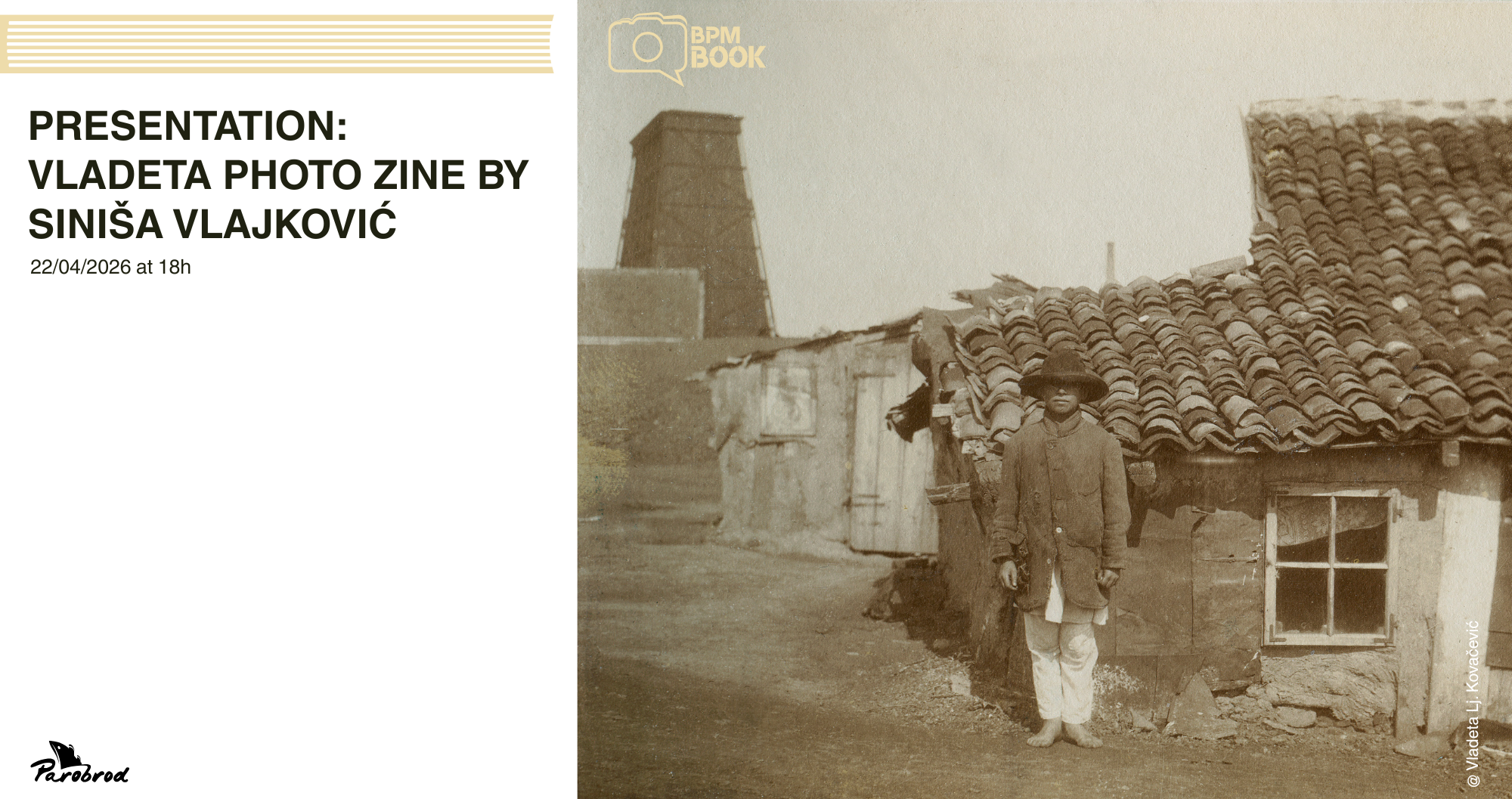
Vladeta is a zine presenting the work of Serbian and international authors whose work explores the cultural memory and visual heritage of Serbia through a personal and documentary approach in the field of photography. The publication brings unpublished and overlooked projects into the spotlight, delves into archives, and offers insight into the contributions of photographers from different generations, placing them within a broader cultural and historical context. In doing so, it fosters a dialogue between past and present, offering new perspectives on visual narratives that shape and reflect the region’s identity.
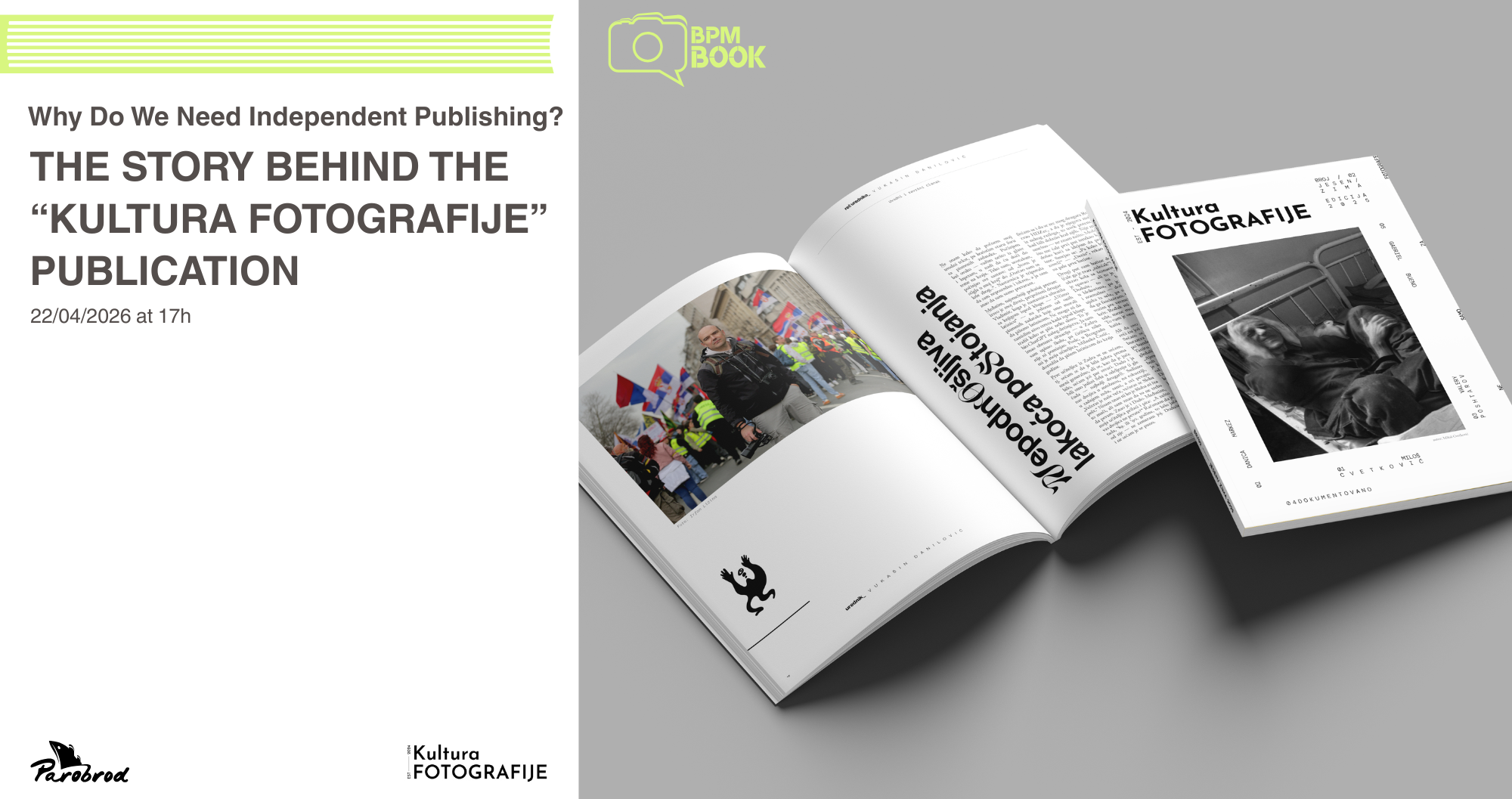
The talk will be conducted in English.
Today, independent publishing in photography is no longer a choice or a strategy — it has become a necessity.
Through my publication “Kultura Fotografije”, I will try to show why this necessity might actually be the best thing that could have happened to us as artists.
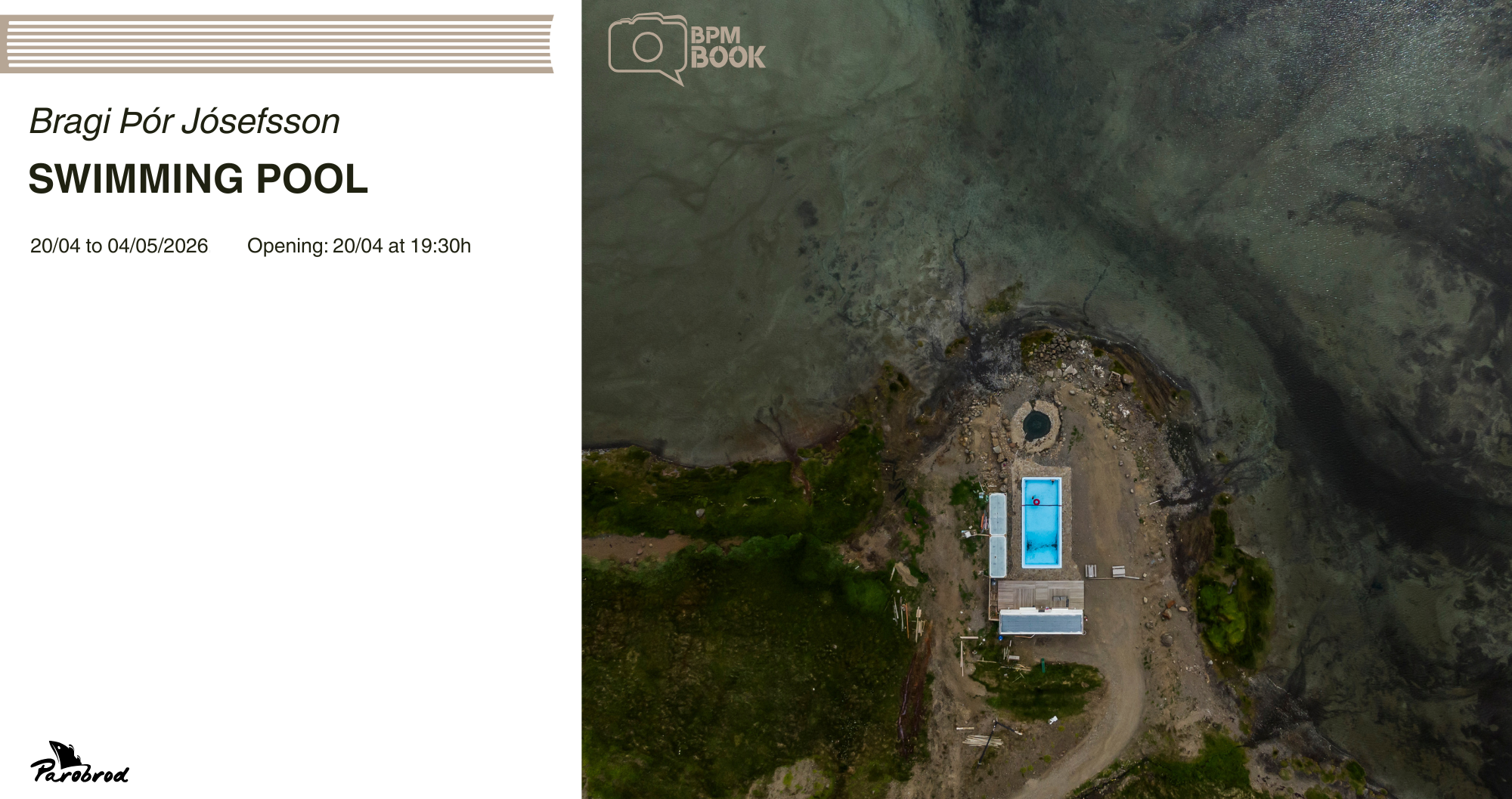
The project Swimming Pool by Icelandic photographer Bragi Þór Jósefsson explores the relationship between architecture, landscape, and everyday life in Iceland through one of the most characteristic spaces in the country: swimming pools. Beyond their practical function, these spaces become places of encounter, observation, and quiet social interaction, where the intimate and the collective coexist in a natural way.
Through a clean, silent, and carefully composed visual language, Jósefsson documents these environments by paying close attention to geometry, colour, light, and human presence. The images convey a strong sense of calm and contemplation, while also speaking about Icelandic identity and the relationship between people, water, climate, and community. In these photographs, the pools become small stages where everyday life takes on a sculptural and almost minimalist dimension.
Jósefsson’s work exists at the intersection of documentary photography and the photography of constructed landscapes, where space is not simply a background but the true protagonist. Repetition of forms, the presence of steam, the contrast between cold exterior environments and warm water, and the way people inhabit these spaces together create a subtle narrative about how a society relates to its environment.
Bragi Þór Jósefsson was part of the Belgrade Photo Month programme last year with his project Iceland Defense Force, in which he explored the remains of the American military presence in Iceland and its marks on the landscape. While that project focused on memory, geopolitics, and territory, Swimming Pools approaches a more everyday and social aspect of the country, showing another side of Iceland and its visual culture.
Together, these projects reveal the artist’s interest in landscape as a carrier of history, identity, and ways of life, as well as his ability to transform seemingly ordinary spaces into images filled with meaning, silence, and presence.
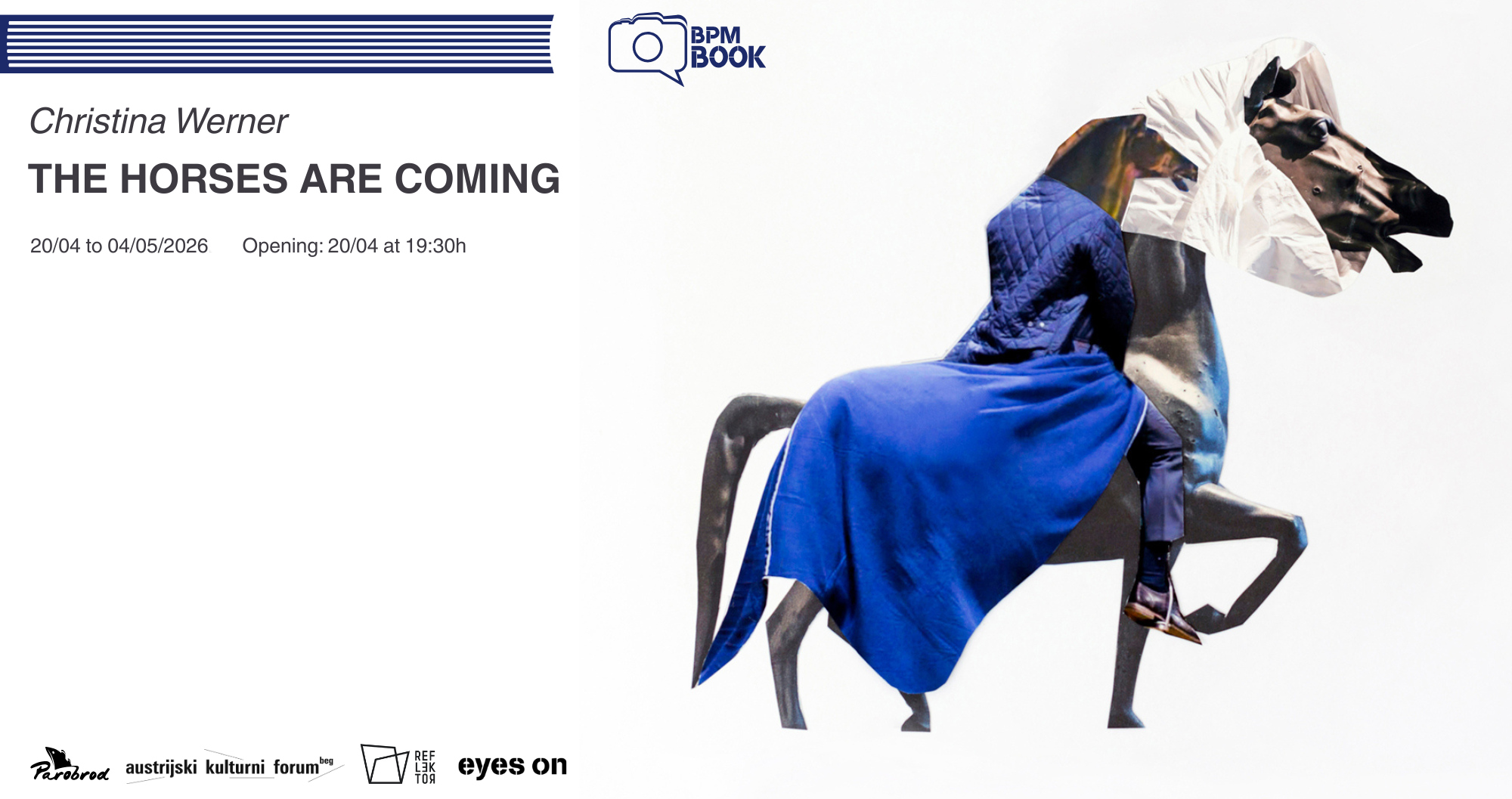
In The Horses Are Coming, Christina Werner focuses on animal symbolism as a main visual and staging strategy of National Socialism: Eagles, lions, horses and sheepdogs functioned in the Third Reich as symbols of strength, purity and order – codes that are still effective today: When Viktor Orbán presents Austria with two horses as a “sign of friendship” in 2022 or Herbert Kickl calls for the launch of a mounted police force, it becomes clear how animal motifs continue to be used as strategic symbols in right-wing and authoritarian narratives.
The work uses the technique of collage to visualise ideological codes by fragmenting and rearranging historical image sources. It is thus in the tradition of political art, such as the photomontages of John Heartfield, who worked visually against the rise of fascism in the 1930s.
Nike Bekemeier, Curatorial Assistence, Westlicht Vienna
Christina Wener
Born in 1976 in Baar (Switzerland), grew up in Baden near Vienna (Austria) and lives and works in Vienna (Austria)
In her artistic practice, she analyzes political visual strategies, mechanisms of visual power, and their dissemination through the media. She focuses on global developments such as the rise of neo-fascism and the role of public space as a place of commemoration. The archive is becoming increasingly important as a source of knowledge and starting point for many of her works.
From 2007 to 2013, she studied photography and moving image with Tina Bara and media art with Alba D’Urbano at the Academy of Visual Arts in Leipzig (Germany).
Works have been exhibited at venues including the Deichtorhallen – House of Photography, Hamburg (D); Lentos Museum, Linz (A); Mattatoio, Rome (I); Museum Villa Stuck, Munich (D); National Gallery, Prague (CZ); Fotogalerie Wien (A); the Goethe-Institut Los Angeles (USA); the Kunsthalle Exnergasse, Vienna (A); the Galerie Photon-Center for Contemporary Photography, Ljubljana (SI); and the Bauhaus Museum Dessau (D).
Her works are included in the following collections: the Austrian Federal Collection, the Vienna Museum, the Collection of the State of Lower Austria, the Lentos Museum Linz, and the Vienna Chamber of Labor.
www.christinawerner.com
Instagram: werner.christina
This exhibition was made possible with the support of the Austrian Cultural Forum Belgrade.
* Galleries and exhibition spaces retain the right to change the date and time of the exhibitions and other events