
Čestitamo GRAIN-u na novom broju magazina. Hvala što je uključena i priča o učešću Beogradskog meseca fotografije na Banjalučkom Demofest-u sa projektima Marije Jankovic i Dejana Klementa. Jedva čekamo sledeći broj!
All posts by belgradephotomonth
GRAIN Magazine – Latest Issue 8/9
Congratulations to GRAIN for the new magazine issue. Thanks for including Belgrade Photo Month exhibitions that were part of Demofest Festival in Banja Luka with Marija Jankovic & Deyan Clement projects. We can’t wait for next!

Carpethian – Felicia Hodoroabă-Simion
Бартcелона Gallery
24th April – 6th April 2017.
Felicia Simion’s photography installation Carpethian raises concerns about the preservation of tradition in modern society by revealing current ways in which traditional carpets are being utilized in her homeland Romania. The exhibition fosters a personal focus on the carpets owned by Simion’s relatives who live in the rural villages of Oltenia. In engaging with a community not yet swallowed by the full-fledged contemporaneity found in urban environments glimpses of bygone relics and past customs can be found and nurtured amongst a remote village setting. However nothing seems completely out of reach for modernity’s tinkering hand and it is the forms in which these customs have inevitably changed that continues Simion’s ongoing investigation into the evolution of tradition. Since the earliest carpets were hand woven in Armenia and Persia they have been attributed with many roles, whether practical or symbolical. From serving as thermal insulation for nomadic tribes’ tents, being adopted as a place of worship and prayer, to becoming a status symbol of wealth and prestige, or purely serving as beautiful decorative objects. With its diverse use and purpose the carpet has always been a part of the daily cultural life of communities in many nations. These days the carpet has been reduced to decoration and is a common staple in home décor stores. Made en masse in factories by machines, the personal human touch is void in the production of modern rugs and the craftsmanship and knowledge of their creation becoming a thing of the past. To own a hand-woven carpet has become a fetishised commodity in modern Western civilizations and problematic in that the owners are unaware of the objects rich history and place in culture. Specific to Romania, Oltenian carpets commonly bore a floral design and were gifted as a dowry for marriages. These carpets bore symbolic significance and would represent the social status of a family, with some carpets specifically customised for certain families that would incorporate patterns and motifs that could represent their amount of wealth, field of work, and history within the design. It was a privilege to own such an object and due to the carpets prestige people would display them in specific areas of the house, often on walls to exhibit their abundance, or immortalise their image with the carpets by standing for their portrait in front of them. Taken in the rural villages of Plenița, Ciocănești and Novaci, Simion documents the history of her own relatives’ carpets by appropriating the aforementioned style of photography popular in Romania one century ago. Staging her subjects in front of the carpets they’ve kept in their homes, she creates a visual juxtaposition between their casual modern attire and the old fashioned style of their rugs. Adversely she inverts this contrast in her self-portrait in which she is presented wearing a traditional Oltenian costume yet pictured in front of a carpet bought by her parents only years ago in a modern furniture store. The carpets featured in her families’ portraits were mainly bought to indulge the beginning of something new, from moving into a new apartment, to marking the demise of communism, or a purchase for a persons wedding, perhaps a hangover from the days of marriage dowries. Reasons for possessing such carpets have shifted into the realm of commodity and the rugs of her family have gradually veered from a traditional Romanian style to that of less precious Turkish and Oriental reproductions.
While Simion’s portraits provide an insight into the contemporary homes of rural Romania and their nostalgia with its rich and colourful past, her enquiry poses a much broader question about the place of tradition in the 21 st century. In discontinuing the handmade production and purchase of domestic Romanian carpets what could be at stake of being lost for the cultures history? In an age where their value is displayed on the opposing binaries of ‘the souvenir shop’ and ‘the heritage museum’ both catering heavily to tourism, how will traditions like these carpets be remembered by Romanian locals as they continue to warp and shift their meaning into a state of commodification. When confronted with Simion’s photographs, bound up in memory with their beauty and personal integrity, I’m left pondering mostly whether this commodification is a cultures move towards progress or alternately a mistake in abandoning its past.
Carpethian – Felicia Hodoroabă-Simion
Бартcелона Galerija
24.04. – 06.05.2017.
Izložba fotografija Feličije Simijon pod nazivom Carpethian izražava zabrinutnost o održavanju tradicije u modernom društvu izlaganjem načina na koji se tradicionalni ćilimi koriste u Rumuniji, matična zemlja umetnice. Izložba se fokusira na tepisima rođaka Feličije Simijon koji žive u ruralnim sredinama iz Oltenije. U interakciji sa zajednicom udaljenih sela koja još uvek nije potpuno asimilirana savremenim urbanizmom, mogu se još uvek naći relikvije nekih tradicija iz prošlosti. Međutim, izgleda da ništa ne može izbeći uticaj savremenosti i upravo ovi oblici promenjene tradicije postaju predmet istrage Felicije u evoluciji tradicija. Još od prvih ručno tkanih tepiha u Jermeniji i Persiji, oni su dobili brojne uloge, praktične ili simbolične. Od termičke izolacije za šatore nomadskih plemena, adaptacije za bogomolje i molitve, do simbola statusa bogatstva i prestiža, ili jednostavno lepe ukrasne predmete. Sa svojim najrazličitijim namenama i adaptacijama, tepih je uvek bio deo svakodnevnog života u mnogim nacionalnim zajednicama. Trenutno, uloga tepiha je ograničena na onu dekorativnu i on predstavlja običan predmet u prodavnicama za dizajna enterijera. Masovna mašinska proizvodnja u fabrikama čini da lična ljudska strana nestane u proizvodnji modernih tepiha, a zanat i umetnost njihove ručne izrade postaje prošlost. Posedovanje ručno tkanog tepiha je postao fetišistička vrednost u civilizovanim zapadnim društvima, čak problematično, jer njihovi vlasnici nisu svesni bogate istorije tog predmeta i njiegovog mesta u kulturi. Specifični za Rumuniju, tepisi iz Oltenije obično imaju cvetni dezen i davani su u miraz prilikom sklapanje braka. Ovi tepisi su imali simboličnu vrednost, predstavljali su društveni status porodice, a neki od ovih tepiha su posebno tkani za odeđene porodice i sadržali naznake i motive dizajna koja su izrazila imučno stanje, zanimanje i porodičnu istoriju. Posedovati takav predmet bila je privilegija i prestiž, i zbog prestiža takvog predmeta, ljudi su ih izlagali u pojedinim delovima kuće, obično na zidu da bi istakli na taj način imučnost ili da bi ovekovečili njihov izgled, uradeći svoje portrete ispred njih. Slikama koje su snimljene u selima Plenica, Čiokanešti i Novaći, Simion dokumentuje istorijiu ćilima njenih rođaka, koristeći narodni način portretizacije iz Rumunije prošlog veka. Postavljajući svoje subjekte ispred ćilima koji su sačuvali u svojim domovima, umetnik stvara vizuelnu jukstapoziciju između moderne odeće i tradicionalne ćilime. S druge strane, preokreće taj kontrast u autoportretu gde je prikazana u tradicionalnoj narodnoj nošnji iz Oltenije ispred jednog modernog tepiha koji su njeni roditelji kupili pre samo nekoliko godina u jednoj modernoj prodavnici nameštaja. Ćilimi koji se pojavljuju u porodičnim portretima kupljeni su da bi označili novi početak, useljenje u novi stan, pad komunizma ili pripreme za nečiji brak, verovatno reminiscencija prošlog vremena kada se davalo miraz. Razlozi posedovanja takvih tepiha su prebačeni u oblasti materijalizma a ćilimi njene porodice postepeno su se promenili, od tradicionalnih rumunskih do masovnih reprodukcija, turskih ili orijentalnih, manje vrednim.
Portreti predstavljeni od strane umetnice Simijon pružaju pogled u seoskim savremenim domovima Rumunije i izražavaju nostalgiju za bogatom i slikovitom prošlošću, ali njegovo istraživanje postavlja ozbiljna pitanja o mestu tradicije u 21. veku Prekidom tradicionalne proizvodnje i nabavke rumunskih tepiha, šta bi se izgubilo za istoriju kulture? U eri u kojoj su tepisi izloženi u ekstremnim suprotnostima, u prodavnicama suvenira ili u etnografskim muzejima, obe lokacije sa jakim turističkim značajem, kako će rumunsko stanovišto čuvati tradiciju čiji sastavni deo su i ovih tepisi u uslovima neprekidnog prilagođavanja na ovo stanje materijalizma? Gledajući slike koje prikazuju uspomenu na lepotu i lični integritet, postavlja se pitanje da li je ovaj materijalizam korak kulture ka napretku ili greška napuštanja prošlosti.

Seascapes – Martin Breindl and Wolfang Muller
Gallery Pro3or
24th April – 2nd May 2017
Wolfgang Müllner’s photographs are marine panoramas of a kind familiar from vacation shots. The horizon divides the picture right down the middle. Müllner then takes the color information “inscribed in” a given picture and calculates the average tonal values of sea and sky, respectively. He uses these two values to “overwrite” the image with monochrome fields, pushing the original motif back to the edges of the picture so that it serves as a mere “passe-partout,” a matte for a new form that renders an interpretation of the same segment of reality.
Martin Breindl’s graphic cycle Die Sehnsucht nach dem Meer (konkrete Version) translates the “longing for the sea” into a literal “description” of identical motifs. An imaginary horizon line splits the superimposed words HIMMEL und MEER, or SKY and SEA, in two and reconstructs them. Step by step, Breindl lends concrete substance to the composition by applying the same method to different manifestations and a spectral perception of the motif, almost incidentally revealing it to be a mirror image. Müllner’s and Breindl’s works are at heart essays in writing. The dialogue between the pictures playfully dismantles the distinction between “photography” and “graphic art.” What Müllner conceives of as the multiplicity of seascapes is to Breindl’s mind an instance of linguistic variety. Both perspectives are systematic and formulaic, suggesting the ways in which industrial standards and specifications inform our increasingly “automated” perception of the world around us.

Morski pejzaži – Martin Breindl i Wolfang Muller
Galerija Pro3or
24.april – 02.maj 2017
Fotografije Volfganga Milnera su narazličitije morske panorame koje prepoznajemo sa brojnih fotografija sa letovanja. Horizont deli fotografiju tačno na sredini. Miler uzima informacije o bojama koje su „upisane“ u svakoj slici i izračunava srednju vrednost tonalnih vrednosti kako neba tako i mora. Ovim vrednostima on „preslikava“ originalni motiv monohromnim površinama, gurajući ga na ivice fotografije gde on služi samo kao „paspartu“ za jednu novu formu interpretacije istog segmenta realnosti.
Martin Brajndl u svom ciklusu Die Sehnsucht nach dem Meer (konkretna verzija) opisuje potpuno iste motive kao i Milner, gotovo doslovno. Reči NEBO i MORE koje stoje jedna iznad druge imaginarna linija horizonta deli na pola i iznova ih konstruiše. Korak po korak, Brajndl konkretizuje ovu demontažu, u kojoj koristi istu metodu na agregatnim stanjima i spektralnoj percepciji, koja se gotovo istovremeno ispoljava kao odraz u ogledalu. Milerovi i Brajndlovi radovi u suštini su eseji. Dijalog između fotografija poigrava se sa granicoom između fotografije i grafike. Ono što su za Milnera brojni prizori mora, za Brajndla su jezičke varijacije. Obe perspektive su sistematizovane i šablonizovane, ukazujući na pogled na svet na koji sve više utiču percepcije mašina, industrijskih standarda i normi.
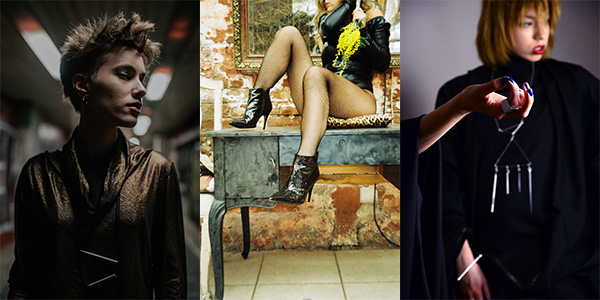
Group exhibition – Pokret Concept Store
Pokret Concept Store
22nd April – 22nd May 2017.
Autors:
Ivana Čutura, Boris Jovanović, Sofija Nikić, Dzenet Koko, Katarina Marković i Olga Radonjić
Grupna izložba – Pokret Concept Store
Pokret Concept Store
22. aprila – 22. maja 2017.
Autori:
Ivana Čutura, Boris Jovanović, Sofija Nikić, Dzenet Koko, Katarina Marković i Olga Radonjić

Music is Not Dead – Aleksandar Zec
Nesovic Fine Arts
22nd – 30th April 2017
Music is Not Dead – Aleksandar Zec
Nešović Fine Arts
22. – 30. aprila 2017.