Na tragu svetlosti – Foto savez Srbije

Galerija 73

20.aprila – 2.maj 2017.

NA TRAGU SVETLOSTI je tradicionalna izložba Foto saveza Srbije nagrađenih fotografija iz prethodne godine. Svečano otvaranje ove 11-te po redu izložbe je zakazano za četvrtak 20. aprila od 19 časova u Galeriji '73 (Požeška 83a, Banovo Brdo). Izložba će biti otvorena do 2. maja 2017. godine.
Beogradski mesec fotografije, Galerija 73 i Foto savez Srbije uspešno nastavljaju saradnju u vidu organizovanja prolećne, tradicionalne izložbe fotografija „Na tragu svetlosti“. Izložbom fotografija „Na tragu svetlosti“ Foto savez Srbije prezentuje najnovija ostvarenja svojih najuspešnijih autora, u vidu godišnje smotre, pre svega, amaterskog fotografskog stvaralaštva radi afirmacije fotografije i njenih autora. Selektovane su sve fotografije koje su tokom prethodne 2016. godine nagrađivane na izložbama najvišeg ranga u zemlji i inostranstvu. Ovom prilikom digitalna zbirka savremenih radova FSS proširena je za nove radova od oko 50 autora.
Za izložbu „Na tragu svetlosti“ slobodno se može reći da je to izložba nad izložbama u Srbiji. Zato što je tu reč o predstavljanju najboljih fotografija isto toliko fotografa iz Srbije koji su osvojili zlatne, srebrne i broznane medalje na najznačajnijim domaćim foto konkursima prvog ranga, kao i na međunarodnim izložbama širom sveta, a pre svega pod patronatom FIAP-a (Međunarodne organizacije umetničkih fotografa). Ovogodišnji kvalitetni katalog, kao i prethodnih godina, ima će  spisak svih radova i reprodukciju po jednog rada od zastupljenog autora. Za izlaganje u Galeriji 73 takođe je predviđeno da svaki autor bude zastupljen sa po jednim radom, sa namerom da se publici na najbolji način prezentuju savremena ostvarenja članova FSS. Izložene fotografije su kvalitetno izrađene i adekvatno opremljene za postavku, kao što je bilo i prethodnih godina od kada se u prolećnom terminu u Galeriji 73 predstavljaju nagrađeni radovi članova Foto saveza Srbije.

Izložbe „Na tragu svetlosti“ održavaju se od 2007. godine i ovogodišnja je JEDANESTA u nizu.

Share

Genius Loci – Milica Nikolić

Kula Gardoš

19. – 29.aprila 2017.

Izložba fotografija i instalacije – Genius Loci, nastala je kao rezultat proučavanja kombinacije analogne fotografije, digitalnog printa i reciklaže. Analogni printovi kolor fotografija okružuju multimedijalnu instalaciju načinjenu od recikliranog papira, fotografije i raznih organskih odpadaka nađenih na obali Dunava, kao sto su suvo granje, lišće, perje, bambus. Tehnikom ručno recikliranog novinskog papira, razne misli, stavovi, informacije odštampane u njima su istopljne i samlevene u pulpu kojoj je unešena čista iskonska ideja – seme. Papir sa semenjem je sa jasnom namerom okarakterisan motivom preminule ptice tokom zime. Time se odaje počast svim tim divnim bićima koja su živela i žive u staništima vekovima unazad još iz doba Skordisaca koji su među prvim narodima naselili donje obale Dunava. Skrivene bele paperjaste konture ptice, na centralnoj instalaciji izložbe, iz koje buja život zasejanih biljaka podunavskog predela predstavljaju bardo ili među- stanje smrti i ponovnog rođenja po drevnom tibetanskom verovanju. Ovaj pojam ne mora nužno da bude shvaćen kao spiritualan već kao period blokada prouzrokovane ne samo negativnim već i meditativnim stanjem duha. Taj duboki mir je tražen u šumi i kanalima Velikog ratnog ostrva, obalama Dunava i uskim sokacima Zemuna čiji kadrovi okružuju tu zaleđenu ali probuđenu dušu
životinje kao njeni zaštitinici tokom njenog preobržavanja. Duhovni zaštitnici mesta, Genius Loci (lat.), danas više definisana kao karakteristična atmosfera prostora je sakrivena u motivima na fotografijama koji ostalja slobodu posmatraču da ih oseti, poštuje i pronađe na tim mestima. Sam čin zalivanja fotografije u instalaciji i vreme pre početka klijanja samih biljaka predstavlja fazu drugog bardo-a i vremena kada se usnulo semenje budi kao iz lucidnog sna, sa svesnom namerom ka svom postanju. Nakon putovanja njihovih energija, iz fotografije niču klice, probijaju se kroz štampane slojeve pulpe razgrađujući sliku kraja, tj zamrznute ptice. Svi smo pozvani da učestvujemo u tom procesu bilo posmatrajući ili podstičući kruženje čiste energije zalivanjem izdanaka dok tragamo za
nekim svojim genius-ima.

Edvard Munk je u svojoj svesci “Drvo znanja u dobru i u zlu” naveo: “Iz mog trulog tela cveće će nići – i ja cu u njima biti – večnost.”

Milica Nikolić

Share

The Good Wife – Deyan Clement

Belgrade University Library

19th April – 13th May 2017


The good wife, is comprehensive, multimedia project from 2015. started with series of self-portraits in which the author is questioning the role that woman has in the contemporary society, where this
‘contemporary’ is more like a linguistic curtain, that hides totally opposite show and intent from the
patriarchy, to save its positions and domination. With ironic approach, author uses his body and props, trying to trivialize the ideas of ‘the good wife’, playing with frequent stereotypes, from the typical ones, good mother, to flower fixer or the queen of the kitchen. His heroines are free from their identity; they are static, frozen and ‘nicely packed’ sculptures, perfect ornaments for your home. This question could be generalized to the point where we can ask ourselves one even more schizophrenic than this, why the bad is bad and the good is good, and what is criteria for that polarization. Or, if woman has a right to choose, how than she can’t have her own choice.How do we find the balance in those irreconcilable positions, the ones that the society give to me and the ones I choose myself, it is most important question in the second part of the work, where the focus is “in her eyes” , and asks us to look and see what it is that she is seeing.

Retraditionalization is more and more in everyday life, and in many bigger cultures than the one we live in, but what is interesting for Clement, is the phenomenon of mythologization and fiction in those traditions we learn about; in mainstream media we see a woman fighting against a woman who gave her right to be in mainstream media and fight for or against anything; very common conflict between what the lobbyist is saying and the way that he lives; terrifying statistic that each year is rising more and more in violence against woman, from the psychological one to the one with fatal outcome; all of that is motivation for this work to be created. For the author most important thing is making philosophical task, not the reason for debate or building up of your own side on this topic, but the reason to think about it, to question it, to analyze yourself and the world around you through his artistic idea.

Share

The Good Wife – Deyan Clement

Galerija umetničkog centra Univerzitetske biblioteke Svetozar Marković

19. april – 13.maja 2017.


The good wife, je obuhvatan, multimedijalni projekat započet 2015. godine serijom auto-portreta uz
pomoć kojih autor preispituje ulogu koja se priželjkuje za ženu u savremenom društvu, gde ovo ’savremeno’ postoji mnogo više kao lingvistička zavesa, iza koje svakodnevno posmatramo potpuno
suprotne predstave i nakane partrijarhata da očuva svoje položaje i dominaciju. Ironičnim pristupom autor koristeći svoje telo i rekvizite, performativno obesmišljava ideje o ’dobroj ženi’, poigravajući se sa učestalim stereotipima, od onih najklasičnijih, dobra majka ili hrišćanka, do popravljačice cveća i kraljice kuhinje. Clement svoje junakinje lišava identiteta, one su statične, zaleđene i ’pristojno upakovane’ skulpture, savršeni ukrasi za vaš dom. Ovo pitanje moglo bi se generalizovati do te mere da nas suoči sa još shizofrenijim, zašto je loše loše a dobro dobro, i kakvim se kriterijumima dolazi do te polarizacije. Ili ako žena ima pravo na izbor, zašto nema pravo na sopstveni izbor, i sl. Kako pronaći balans u nepomirljivim pozicijama, one koje mi je društvo dodelilo i one koju sam sama
izabrala, dakako je pitanje koje se provlači u nastavku projekta, gde se akcenat premešta fotografijom u predložene stvarnosti određene žene i poziva nas da postanemo saučesnici u njenim realnostima ’gledajući njenim očima’.

Retradicionalizacija je sve češća pojava i u mnogo većim i razvijenijim kulturama od one u kojoj mi živimo, ali ono što je zagonetno za Clementa, jeste primetan fenomen mitologizacije i izmaštavanja
tradicija kada se retradicionalizacija prodaje kao politika; u mejnstrim medijima slušamo žene koje se bore protiv žena zahvaljujući kojima su dobile pravo da se bore na mejnstrim medijima protiv bilo čega; čest sukob onoga što se lobira i načina na koji lobista živi; užasavajuća statistika koja svake godine beleži obaranje prethodnog rekorda u nasilju nad ženama, od psihološkog do nasilja sa smrtnim ishodom; sve to su pokretači ovog projekta i otuda izbor ironije kao najvažnijeg oružja za otpor. Za autora je najvažnije stvoriti filosofski zadatak, ne povod za debatovanje ili građenje – nadograđivanje stava, per se, već povod da mislimo, da se pitamo, da analiziramo i sebe i svet oko sebe kroz ovu umetničku ideju.

Share

East to East – Klavdij Sluban

Klavdij Sluban
Winner of the European Publishers’ Award of Photograpy (EPAP) 2009

EAST TO EAST : published by 6 European publishers:
-Actes Sud, France
-Dewi Lewis Publishing, England
-Braus Verlag, Germany
-Lunwerg Editores,Spain
-Peliti Associati Editore, Italy
-Apeiron Editions, Gteece

Text by Erri de Luca

Twenty years ago, a dividing wall was breached and the door to Eastern Europe thrown wide open. To talk of ‘the fall of the Berlin Wall’ is not strictly accurate: it didn’t fall down, there was no subsidence. Its time had passed and it was torn down. I have been a builder; for many years I have also knocked down walls – it’s good when they are no longer needed. To tear down a dividing wall is wonderful; to clear away the sentry post on a border which no longer exists. The one thing I love about new Europe is the abolition of internal borders. I love the word ‘union’. Walls have two sides and two purposes: one is to offer protection from the outside elements, theother to keep people in – to imprison those inside. The twentieth century has seen more imprisonment than any other period in the history of mankind. In my own country, Italy, people of my generation, the last revolutionary left-wing generation of the West, have been imprisoned more often than at any other time in the history of the country, shattering the record of incarceration set during the Fascist years. The walls of the twentieth century were built to confine people.

Klavdij Sluban comes from the segregated half of Europe, he is used to fences and to bars. He has even taught photography in prison. In this book he visits the East, an East whose people have been
set free, like monks released from an enclosed order. Twenty years ago, in Berlin, a dam was demolished. One autumn evening, a throng, a tidal wave of people poured towards the forbidden half of the divided city through the first breach in the wall. Just a few metres and they were reunited with their compatriots. That night Germany slowly began to emerge from the effects of a war that had been lost forty four years before.Twenty years ago the Eastern part of a world in conflict, a world then divided in two, broke down the barriers and broke ranks. Poland, Hungary, East Germany: Eastern Europe dismantled the locks and the bolts. In Romania, the Latin Slavs subjected their dictator and his wife to summary trial and quick execution by firing squad. Like his fellow countrymen Klavdij Sluban, who spent his childhood in Livold, Slovenia, belonged to Yugoslavia, a country which ended up being torn apart in the final decade of the century. As an aid convoy driver, I experienced the war of the southern Slavs: as soon as the shackles of union were removed they became free to destroy each other. I saw the flowering bushes of barbed wire, the multiplication of frontiers, the desecration of graveyards, the destruction of places of worship, the names expunged from registers one by one. From this region of all-consuming hatred the photographer emerges, his Leica slung over his shoulder and loaded with black and white film. He tells about those in the East, to those who hardly knew the East existed. For those who, like me, know that the day begins in the East, the photographer’s revelations upset the equilibrium, revealing the shadows that emanate from there. Even the snow is dark, the light a faded white, exiled to the surface. The photographer walks through the abandoned cities of the East. Where have all the inhabitants gone? Is anyone left hidden in the mist, is there some poor wretch on the run or with their back to the wall. The photographer presses on, in search of people, beyond Europe, advancing into Asia, Russia, Mongolia, China, on the Trans-Siberian Railway, but he finds no areas of dense population. Everywhere it is the geography that dominates, making human beings insignificant. Lake Baikal, in Siberia, the deepest lake in the world and the richest in oxygen, is an unseeing eye to those on the passing train. To those who know of Asia as a continent teeming with billions of people the prophetic vision of an empty world is offered. It is peopled only by the one or two souls who are left after who knows what mass exodus or population disaster: the remaining few live on there without hope. The Hebrew word kèdem indicates both time past and the East. The journey of the photographer, rather than leading him to an East that is conceived as time past, opens a crack in the wall of time and takes him into the future. He visits the East as if he were a pilgrim consulting an oracle. From it he receives visions veiled in smoke and mist: the East is a defeated future, a time yet to come for humanity, stretched out and flexing, as if it were a tail, still wagging, if only feebly. The tail, as every butcher knows, is the hardest part to skin. And the future depicted here in photographic images is hard, hard to listen to. From the noisiest century of all, the greatest producer of mechanical clatter, we shall pass into a world of silence. The future will be accompanied by the silence of those who have been struck dumb. In these photographs, the use of black and white is like the fitting of a silencer to the barrel of a gun. The photographer is a marksman. The rumble of escalators, nuclear power stations, trains and urban landscapes breaks up into whispers. The photographer is homesick for the native snow of his childhood, the snow that used to blanket his corner of the world. But here it has become a white leprosy; it doesn’t coat the ground but eats away at it. Its silence is oppressive. Occasionally the photographer uses a fast exposure to capture a movement, a sudden rush. More often he uses a long exposure and a very small aperture, so that the image is suffused with silence. To give subjects stillness a longer exposure is required. Stillness is the state of grace of a messianic moment, not the thrill of a divine visitation, but the conclusion of a race. The trunks of four slender birches stand out from the wood, like sentries in white. They signal the land’s return to nature, free from human intervention, reclaimed by the wind. I am moved by the single historical flashback which appears in the book, the rush of the sailors across the square for the onslaught on the Winter Palace. The photographer wasn’t there, but he wanted to recreate the scene, and so he photographed a painting exhibited in a museum in St. Petersburg, known as Leningrad to those of us from the twentieth century. It is the only image of a mass of people in motion in the book and it comes from a painting from the beginning of the revolutionary era. Anyone with an imaginative ear can hear the crackle of the bullets and crunch of the trodden snow. The balance of power between the oppressors and the oppressed was changing throughout the world with the revolutions in the East. Ours was a century of insurgents. One photograph is a portrait of our times, the face of a woman with her lips parted to kiss
nothingness, caught in a mirror image. She is turning and is divided for ever. The whole of the East
looks in this way towards the West. Its speechless gaze is the mutest of the whole collection: it
offers and invites a greeting – and silences the onlooker.

Erri de Luca

Share

East to East – Klavdij Sluban

Institut francias de Serbie

18.aprila – 20.maja 2017.


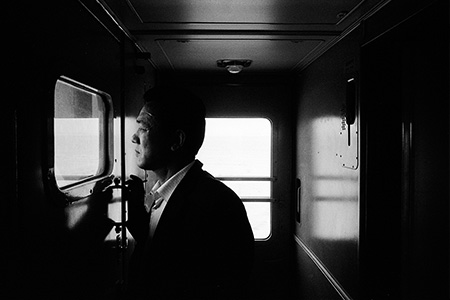
Klavdij Sluban – East to East

Fotograf Klavdij Sluban potiče iz jedne polovine odvojene Evrope, naviknut je na zabrane i rešetke. Poželeo je i da podučava fotografiju u zatvoru. Ovom knjigom posećuje Istok, bivši manastir. (…) Manje je u pitanju putovanje ka Istoku posmatran kao prošlo vreme, a više kao upad fotografa u budućnost, kopanje rupe u njenom zidu. Fotograf posećuje Istok u svojstvu hodočasnika koji ispituje proročanstvo. Odgovori mu se javljaju kao vizije u sred isparenja i dima. Istok je budućnost u pometnji. (…) Eri de Luka

U saradnji sa Kulturnim centrom Beograda

Rođen u Parizu 1963. godine od roditelja Slovenaca, Klavdij Sluban dobitnik je EPAP nagrade European Publishers Award for Photography) 2009, i njegova knjiga Transsibériades objavljena je simultano na šest jezika u šest evropskih zemalja. Laureat je i nagrade Leica (2004) kao i nagrade Niépce (2000). Slubanovo delo je veoma lično, koherentno i oštro, što ga čini jednim od najznačajnijih autorskih fotografa njegove generacije. Njegova fotografska putovanja, često povezana sa književnim delima, povezana su aktuelnim zbivanjima. Crno more, Karibi, Balkan, Rusija, Kina, Centralna Amerika, ostrva Kergelen na Antarktiku … mogu da se protumače kao susret trenutne stvarnosti i unutrašnjeg osećaja fotografa dromomana. Duboke crne površine i siluete u kontralihtu daju njegovom delu čistotu i jasnoću oslobođenu svake didaktičnosti ili egzotike. Od 1995. Klavdij Sluban fotografiše maloletnike u zatvorima gde priređuje i radionice fotografije. Uz podršku Anrija Kartije-Bresona, Marka Ribua i Vilijama Klajna, radi u zatvorima u Francuskoj, disciplinskim logorima u istočnoj Evropi, u bivšoj Jugoslaviji (Sloveniji) i Srbiji (Kruševcu i Valjevu), u bivšem Sovjetskom savezu (Ukrajini, Gruziji, Moldaviji, Letoniji, Rusiji) kao i u centralnoj Americi i Brazilu. Upoznat je sa zatvorskim prostorima i druži se sa zatočenicima, te u svojim delima govori o problemu zatvorenog prostora i skučenog horizonta. Slubanove fotografije su prisutne u velikim izložbenim prostorima, u Muzeju fotografije u Helsinkiju, Muzeju lepih umetnosti u Kantonu, Metropoliten muzeju fotografije u Tokiju, u Teksas muzeju u SAD, na Susretima u Arlu, u Evropskoj kući fotografije kao i u Centru Pompidu/Boburu u Parizu. Godine 2013. priređena je njegova retrospektiva u muzeju Niepce u Francuskoj a 2015/16 dobitnik je rezidencijalnog boravka Villa Kujoyama u Kiotu (Japan). Objavio je mnoga dela a član je i brojnih francuskih i međunarodnih žirija fotografije. Francuski institut u Srbiji priredio je 2003. godine izložbu njegovih dela u Beogradu.
Pogledajte video o Slubanovom radu sa Anri Kartije-Bresonom Slubanov video intervju gde objašnjava svoj rad sa mladima u zatvorima kao i jedan tekst na istu temu Prikaz izložbe Živeti u egzilu predstavljene u Maison européenne de la photographie. Njegovu izložbu  na Festivalu u Arlu.

Share

Grupna izložba – Fabrika Fotografa

Galerija Božidarac – 1947

18. – 30. aprila 2017.


Temelji Fabrike fotografa postavljeni su u oktobru 2013.godine, ubrzo smo digli krov i krenuli sa radom svakog vikenda. Od tada se širimo lagano, preko hiljadu fabrikanata smo pustili u pogon.
Mnogi su promenili zanimanje, neki upisali fotografiju na akademiji, a neki već godinama dolaze i želja za novim saznanjima ne jenjava. “Fabrika” Endija Vorhola nam je bila zvezda vodilja, povod i njenog osnivanja je okupljanje kreativnih ljudi u zdravoj i inspirativnoj atmosferi, u cilju uzajamnog unapredjivanja i produktivnosti. Za razliku od Vorholove “Fabrike”, polaznici “Fabrike fotografa” su uglavnom neafirmisani, a i osnivača niko nije pokusao da ubije. Jos uvek. 😉

Na izložbi “Fabrika fotografa” predstavlja se 12 fabrikanata:

Gordana Belić- Bežanija, od očaja do sjaja
Olivera Bojadžić- EU
Ivan Damjanović- Američki san
Jelena Duvnjak- Priče sa reke
Biljana Đurić- Mir
Ana Jovanović- Moj stidentski zivot
Marija Milošević- Prvi portret
Nikola Mitić- Zvezdine zvezde
Milica Rašković- Anksioznost- Move outside the box
Marija Stepanović- Beograd u Vodi
Marija Trkulja- Sneško
Žana Šišić- Na putu do…

Fabrikante oblikuje Aleksandra Popović


Share

Baggage – Luka Klikovac

Baggage

Luka Klikovac

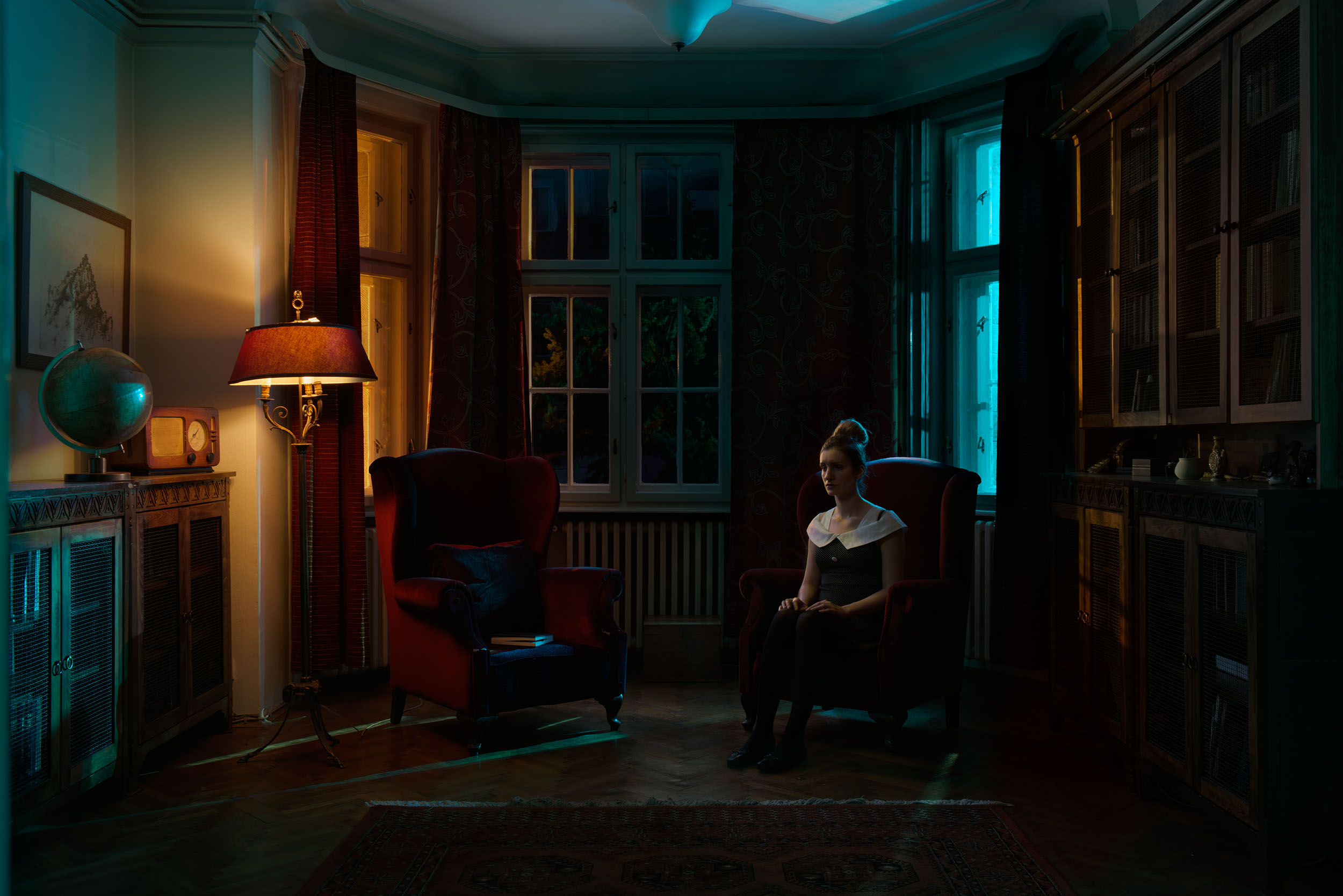
In the cult film Blow-Up by Michelangelo Antonioni, the main character, a fashion photographer, took candid photos of a loving couple in a deserted park. The woman who desperately tried to come into possession of negatives and her interest in the film itself urged him to scrutinize the scene. By gradually blowing it up, the classic black and white documentary photography became an imperfect, spoiled, granular structure, while a common, slightly idyllic scene became a bizarre one, because there was a hidden picture behind it – a murder scene. What hides behind – that is a question that can be connected to each photography. Born in a dark, mysterious box, photography has gained the status of a “mirror reflection” because of our century-long aspiration to capture the real picture of nature. In its imposed and ostensible reality, it leaves space for us for various interpretations, destructions and deconstructions, for creation of one or more situations and stories below the primary picture that was presented to us. A series of photographs and X-rays called Baggage represents the last part of the trilogy of Luka Klikovac. In the first part Memento, the author, through photos of sterile, hospital atmosphere of young people on the autopsy table, deal with the analysis of life, death, time, our pointless fight with it, as well as the photography itself which constantly reminds us of transience and end. On the contrary, in the Mirror, with images of the same people, but in coffins and with certain costumes and props, he focused on unfulfilled desires, fantasies and imposed ideals, false self-presentation in the society of continuous production and
consumption of technological images, in short, on what we strive for during our life, more or less, and what becomes totally irrelevant with the termination of life itself. The story continues and at the same time ends with the project Baggage, which is placed between the mentioned cycles and represents a potential reality. The same actors were shot at night in different exteriors and interiors of surreal, tense and creepy atmosphere. With cold, aloof glance, as if the last people on earth, they are shown with suitcases and bags anticipating an action that is yet to happen. Who are they? What or who are they waiting for? Where are they going? These are not the only questions that are imposed. Perhaps more important one is: What are they carrying in their baggage? Due to the presence of tension and film structure, and more than in previous two cycles, Luka Klikovac has taken the position of a film director, the one who has left nothing to chance, from selection of locations and appearance of protagonists, through lightning and shooting, to presentation in the gallery. At the same time, he went further by introducing enlightened X-rays that reveal the mystery of the contents of baggage itself to spectators. According to common understanding about photography, the negative or the film hides something because it gives us shapes of objects, people or situations, while the positive or the image itself is the one that reveals. Here we find the opposite. A photo or a positive is the one that hides, while the X-ray is the one that reveals the mystery of contents of suitcases and bags, thus introducing new situations and contents into stories. In this way, the problem of reality and authenticity of photography gets a new, atypical approach. Acting on the principle of a trigger and by displacing the classical perception of a spectator, Trilogy and therefore Baggage by Luka Klikovac are the criticism of irony, absurdity, bizarreness of the modern society, our perceptions of the world, time and reality which is intertwined with the analysis and a review of the photography itself and our own perception.

Jelena Matic, MA

Share